Friday, March 15, 2019

Two years in

Exactly two years ago today, I and some 70 other trainees first set foot in Ukraine. We were shepherded to a Soviet-era hotel with rust-colored water for a few days of orientation, then scooped up by our host families for three months of training and borshch. Then we swore to serve for two years as Volunteers, and now here I am.

My service has just become my regular life. Ukraine stopped being a foreign country a long time ago. I've blogged about the local bazaar, the cornucopia of Snickers-themed desserts in my city (there are even more now than before), the "Falling of the Lenins". I hope you've enjoyed my entries about Ukrainian music and poetry.

I'm going to keep my two-year-anniversary blog simple as I start contemplating the end of my time here and the alternately exciting and terrifying idea of returning to the US. What are some of my favorite things in Ukraine? What do I think I'll miss when I'm no longer here?


All the tea


Ukrainian culture is tea drinking culture. Not only are your standard black and green teas available at virtually all work events and social gatherings, but Ukraine boasts a huge variety of herbal and fruit teas.


Ginger tea, sea-buckthorn tea, blueberry tea, citrus tea, cranberry tea, plus your standard herbal teas like mint, chamomile, melissa... I've even had linden flower tea, basil tea, and a whole array of things I never tried in the US.


I once went down quite an impressive internet rabbit hole to figure out what ivan chai is - folks call it fireweed in the US, I think. In Ukraine, it's harvested in the Carpathians. I am now awaiting a promised care package of home-fermented ivan chai from a Lithuanian friend.

Na zdorovya!

The bazaar


My first 6 months or so in Ukraine, I was intimidated of the bazaar. It's big and disorienting. It's crowded. Ukrainians don't share Americans' love of personal space, so people constantly bump into you and otherwise get too close for comfort.


To face my fear of the bazaar, I wrote a blog about it, and now it's my favorite place to shop for food and certain household wares. I live in an agricultural region of this very fertile country, so the bazaar is overflowing with whatever fresh fruits and vegetables are in season: giant watermelons, fragrant fresh herbs, staples like potatoes and garlic and onions, fragrant apricots, a huge variety of apples, and the best berries of every kind. Everything at the bazaar is fresher than what you can get even at the nicest of the grocery stores.


In the US, farmers' markets are luxuries. They only happen on certain days of the week, during limited hours. If you don't live near one, they're not always convenient to get to. But in Ukraine, every village and town and city has at least one bazaar. And while a farmers' market is the closest American thing I can imagine in comparison to the bazaar, the bazaar is so much more. Imagine if Home Depot, Target, Goodwill, and the local farmers' markets combined forces to become a giant outdoor trade hub every day of the week. And if they were staffed primarily by grannies. That's the bazaar, and I'm going to miss it. 


Work-life balance
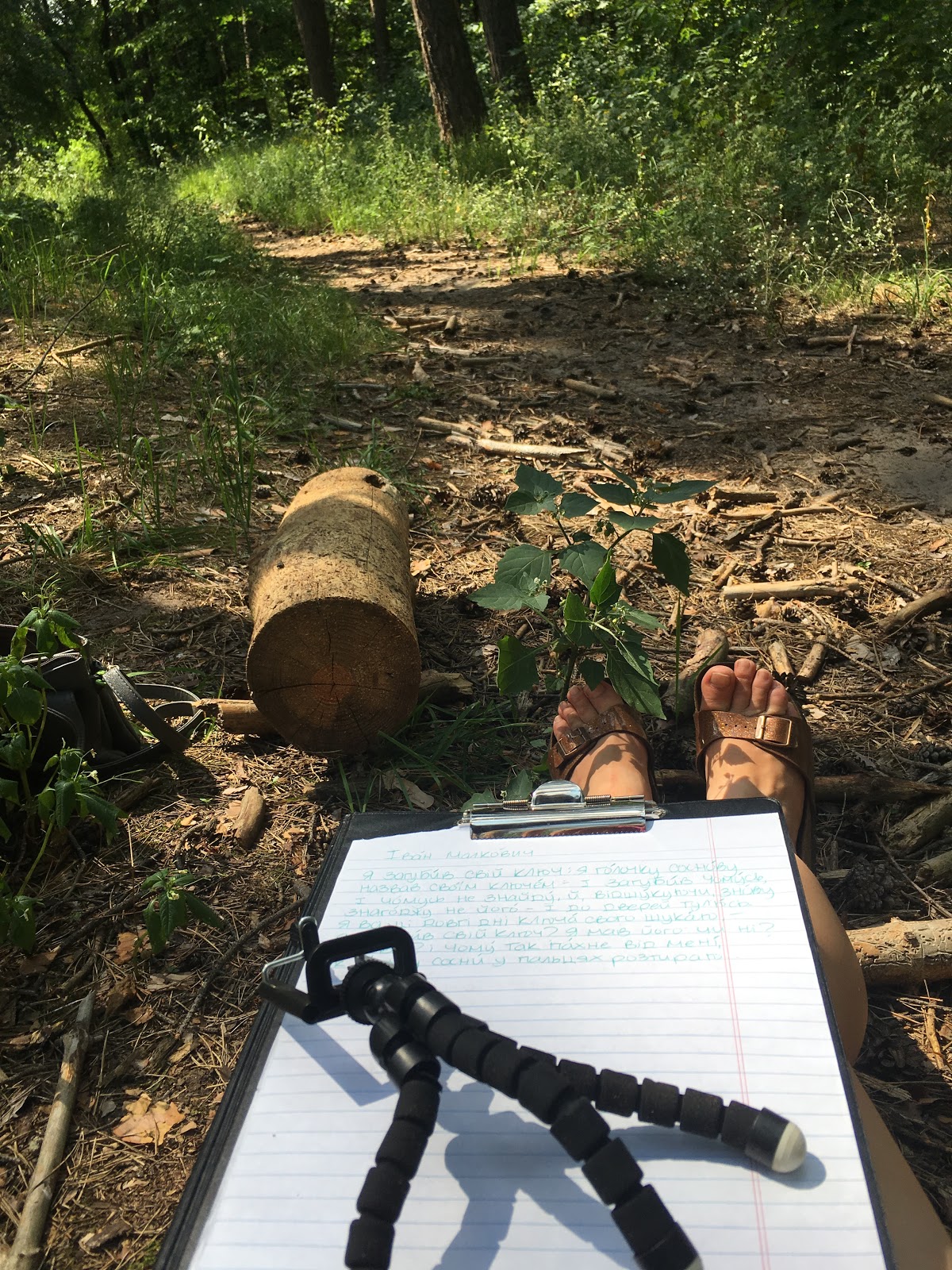

This is not universal across Ukraine, of course, but in my role as a Peace Corps Volunteer in a small NGO, I have almost full autonomy over my schedule. Ukraine generally tips toward the "life" side of work-life balance, and while this can be frustrating when trying to get things done at a pace that corresponds to "Western" expectations, it's also afforded me a pretty comfortable daily life.


I can visit the bazaar at 11 AM on a Wednesday if I want to. I can take my cat to the vet whenever I feel like it (and by the way, everything's on a walk-in basis - no appointment needed unless it's for surgery, and I never wait more than a few minutes). If it's a beautiful day, I can spend the bulk of the afternoon in the park and then do all my work at home in the evening. As long as I finish my tasks, meet my reporting deadlines, and keep up with my occasional presentations, clubs, meetings, etc. I can pretty much do as I please. Adapting to the more regimented and inflexible workplaces of the US is one of the things I most dread about returning. 


Easter


Yes, we celebrate Easter in the US, but not like folks do in Ukraine! While there are many holidays specific to Ukraine or to Slavic cultures more broadly, the global holiday of Easter is still my favorite holiday here. It's hard to surpass the beauty of streams of people with candlelit baskets making their way in the pre-dawn darkness toward the town church to have their Easter bread blessed.


The all-night church service may sound familiar to some devout American Christians, and I was lucky enough to sing in the choir for one such service. When dawn finally comes on Easter Sunday in Ukraine, the joy is palpable. Everybody greets one another with the Ukrainian version of "Christ is risen!", and even though I am not Christian, I get caught up in the excitement. It feels like the resurrection has just happened - that word has just gotten out and people all over are spreading the news. The joy is infectious. That Easter coincides with the coming of spring only heightens this joy, and most people go out for a festive afternoon picnic (if they have survived the all-night service and the following breakfast feast complete with much more cognac and vodka than one would usually drink at 6 AM).

Photo by Georgiy Solonko

Ukraine is world-renowned for its various Easter eggs, and in particular for pysanky - eggs painstakingly decorated using wax and dyes. Different regions of Ukraine have different styles and motifs, and every detail is symbolically meaningful. People hang pysanky and other varieties of Easter egg from the still-bare branches of trees in the springtime, while cities make giant Easter egg sculptures to display in the main plazas. I'm lucky that the timing of my service has allowed me to spend three Easters in Ukraine.


Ukrainian language


I love the challenge and sense of accomplishment that come with speaking a foreign language every day. Each day is suffused with a sense of discovery. Maybe I hear somebody use a word I just learned in my last lesson, or I finally conjugate a particular verb correctly on the first try. Now that I've become somewhat confident speaking Ukrainian, I like testing myself to see if I can "pass" as being local in basic interactions. I usually can't, but at least when people try to guess where I'm from, they guess something like Poland or the Czech Republic - countries that also speak Slavic languages.


Learning and speaking Ukrainian has added significance because of the persecution this language and its speakers have faced throughout history. Listening to an episode of the Ukrainian Lessons Podcast suddenly feels like a big deal when I reflect on the fact that just some decades ago, the girl teaching the podcast would have been arrested for such work.


I think I will feel a sense of loss when I am back in the US and don't get to hear Ukrainian spoken all the time. I will miss it. I recently had a nightmare about returning. I was in a restaurant, speaking Ukrainian out of habit, and then realized that nobody understood me. 

All-encompassing sense of identity


While it's exhausting being a cultural ambassador 24/7, it is nice having the clear and persistent sense of identity that comes with being a Peace Corps Volunteer. This has been my whole life for the past two years. My work is Peace Corps, my friends are Peace Corps, my medical care is Peace Corps, my oversized pajama shirt is Peace Corps, my baseball cap is Peace Corps. Everything is Peace Corps.


Nobody in Ukraine knows what school I went to, what neighborhood I'm from, who my family is, who I am. I came here and put on the identity of Peace Corps Volunteer, and that is the identity I have inhabited every instant of every one of the past 730 days. It is, essentially, my only identity here, and I worry about how disorienting it will be to suddenly not be "Cortney Copeland - Peace Corps Volunteer"; to return to a place where Peace Corps is just some far-off thing that people can't fully understand about me. I'll define myself again, sure, but it won't be quite so simple. Here in Ukraine I get to be just one thing, but in the US I'll have to go back to being many at once. 


Anyway, I have two and a half months left to enjoy all of the above - so I'd better get off my computer, head to the bazaar, and have myself a cup of ginger tea while I still can.


The views expressed in this blog are mine alone and are not indicative of the views of the Peace Corps, the US government, or the Ukrainian government. 

Wednesday, December 12, 2018

Музична Листівка з України, друге видання. Musical Postcard from Ukraine, second edition

Привіт! Hello!

I'm back from a much-needed break from blogging after the intense effort it took to accomplish 30 Days of Ukrainian Poetry back in August. Now that it's winter and there are lots of snowy days to enjoy from the comfort of my apartment, it's a perfect time to get back to writing.

One of my favorite things about Peace Corps service has been getting to know Ukrainian music. Last year I put together my first Musical Postcard from Ukraine, and ever since then the idea for a second edition has been brewing in my head. Without further ado, here is a wintertime sampling of Ukrainian music.

Щедрик - Shchedryk. Traditional - performed by Tina Karol 
It has been snowing all day, the city just put up their lights and started raising the giant Christmas tree in the main plaza - so of course we'll start with a holiday song. Most of my American friends know Carol of the Bells, but I bet not as many are aware of the fact that the song is actually an old Ukrainian one traditionally sung for the New Year. The lyrics are different in the Ukrainian version, but the festive spirit is common to both!


Човен - Boat. Один в Каное. 
In the time that has passed since my last music blog, I've become quite a fan of Один в Каное (Odyn v Kanoe - One in a Canoe). This song, "Choven", uses text from a poem by Ivan Franko (remember him from 30 Days of Ukrainian Poetry?) It begins with a boat floating aimlessly at sea, being tossed about and bemoaning the fact that it doesn't recall where it is from or where it was going. The waves whisper to it, "Who are you, boat? What are you looking for? Where have you come from?"


Світанок - Dawn. Onuka. 
I wanted to work in a piece from Onuka last time and didn't manage. Her music is fascinating - avante-garde with elements of traditional Ukrainian music as well.  She's edgy, uses striking and sometimes unusual imagery, and also has used her music as a venue for commentary on social issues.
This song, Dawn, evokes the image of a family holding out in their home until spring comes, waiting on one who is away at war. "We will live through it, don't worry. We've got everything, but somebody is not here."


Старі Фотографії - Old Photographs. Скрябін. 
We're jumping genres and traveling back in time a bit for the next song - a classic that I occasionally hear blared at karaoke and dinner parties. The band Skryabin was born the same year I was - 1989, and has spanned several genres. The lead singer, Andriy Kuzmenko, passed away in 2015. This song, "Old Photographs", is one I'll have to put on next time my old friends and I bust out our high school yearbooks or laugh about the things we did together 10 years ago. As the chorus goes, "Set old photographs out on the table, tell funny childhood stories. Don't forget your true friends - give them a call."


Відчиняй - Open the Doors. Alyona Alyona.
"You - light up and burn! Light up and burn! My generation awaits our breakthrough!". You'll hear the phrase нове покоління (nove pokolinnya - new generation) many times in this song. Alyona Alyona is a fierce young rap artist who - get this - was working at a kindergarten before breaking into the music scene. I love the video, because it reflects almost exactly what my day-to-day surroundings are like here in Ukraine.


Пісня Буде Поміж Нас - This Song Will Be Between Us. КораЛЛі 
Final song of this musical postcard, and it's time to rock out! I learned about KoraLLi when I saw them live at rock festival in the woods. They hail from the mountains of Western Ukraine, and feature a number of traditional Hutsul instruments in their work. They were an absolute blast to see live! This song is on the classic theme of a man who must leave his love for some time. It is early winter, and he must go - but come spring, he will return to take his love's hands in his once again. "Don't hide the blue gleam of your eyes; sing to me one last time. I'll take that song in my memory, this song will be between us." Sounds sentimental, but it feels like a rock-out party song.


As always - a disclaimer that what is expressed in my blog is my own personal opinion and experience, and does not reflect the views of the Peace Corps or of the US or Ukrainian governments. 

Friday, August 31, 2018

30 Days of Ukrainian Poetry - Day 30 - "Ars Poetica II,1"

Day 30, and what a journey it has been! Over the past month, the days have rapidly begun getting shorter, and the hot humid thunderstorms of summer have given way to crisper and mellower weather that hints at autumn. If we include today's post, we have read 30 poems and been introduced to 19 individuals from several generations of Ukrainian poets. Of those 19, a number were imprisoned or even killed for their work. Poetry is important everywhere, of course, but especially here in Ukraine. That is why our final two poems - 29 and 30 - are about poetry itself.

Time to meet this project's final poet: Bohdan-Igor Antonych. He grew up in the early 1900s in a mountainous region that spans parts of Poland, Slovakia, and Ukraine's Zakarpattia Oblast. He studied in Lviv, where he was active in poetry, music, and the visual arts, and was very prolific given his short life, prematurely cut off by appendicitis and pneumonia at the age of 28. He came of age shortly after Ukraine became part of the Soviet Union, and his poetry was therefore banned and hardly known by anyone until interest in it resurfaced with the dissident-intellectual movement of the 1960s, which we have heard much about through delving into the works of poets like Vasyl Symonenko, Lina Kostenko, and Vasyl Stus. Lucky for us, much of Bohdan-Igor's work has been translated into English. It reminds me quite a lot of one of my favorite poets, Hafiz, because of its high-flying and joyous spiritual nature.

Without further ado, our final poem of  30 Days of Ukrainian Poetry: 

ARS POETICA II, 1

Богдан Ігор Антонич


Я звичайний піїта,
кожний мене захоплює день.
Не розумію світа,
не розумію власних пісень.

Пити захват до краю…
Голос безжурний, немов цвіркуна,
От так собі співаю,
Тільки дзвенить на горах луна.

Захоплення початок,
релігії й сонетів;
захоплення нам родить
апостолів і поетів.

Не вмію писати віршів,
сміюся з правил і вимог.
Для мене поетику
складає сам Бог.

ARS POETICA II, 1

Bohdan-Igor Antonych 

Translated by Michael M. Naydan

I am an ordinary poet,
    each day fascinates me
    I do not understand the world, 
    I do not understand my own songs.

To drink ecstasy to the brim... 
    A carefree voice like a cricket
    this is the way I sing, 
    with just the echo still ringing in the mountains

The beginning of rapture, 
     of religion and sonnets;
     rapture gives birth to our apostles and poets

I do not know how to write poems, 
     I scoff at the rules and standards.
     For me it is God Himself
     who forms my poetics 


In 2009, in honor of the 100th anniversary of Bohdan-Ihor Antonych's birthday, there was a special performance put on in the Lviv Opera House that included music, dance, and readings of his poetry. Unfortunately the video footage of this event is rather poor, but it must have been amazing in person!


And that's a wrap! A huge thank you to everyone who has followed this project and sent encouragement. Through this dive into Ukrainian poetry, I've gotten much more meaning from the buildings and monuments that surround me. Now when I hear a name crop up on a walking tour, I often know something about the work and life of the person who has been mentioned.

I will be doing some thinking on how to continue exploring Ukrainian language and culture on this blog throughout the rest of my service - perhaps a poem of the month, or perhaps another poetry challenge come wintertime when I can finally enjoy all those verses about snow. I do also have some more material on contemporary Ukrainian music in the works, so stay tuned! Until then, it's time to return once again to more traditional modes of studying the language. After all the work that went into this month of blogging, I'm actually relieved at the idea of just doing tedious grammar exercises for a while!


The contents of this blog reflect my personal views and experiences only and are not indicative of the views of the Peace Corps or any other entity. 

30 Days of Ukrainian Poetry - Day 29 - "We're silent, poetry and I"

Here we are on this last day of August, which falls ever-so-perfectly on a Friday, and I am a day behind. No matter, it means we will have a two-poem day today to finish off this project, 30 Days of Ukrainian Poetry.

First - Day 29, which is happening on Day 30, which is happening on the 31st day of the month. Краще так, ніж ніяк. Both Day 29 and Day 30 are devoted to poems about poetry; about how and why people write poetry. It seems only fitting.

We started this poetry journey with Lina Kostenko, and it is to her we turn once again for this penultimate poem of the month. I hope to perhaps dive into some of her prose works now that I have finished my first major foray into Ukrainian literature. For those who wish to find her work in English, here is a bibliography of translations. You can find some collections on Amazon if you are willing to brave the occasional notices of "unavailable" or "out of print".


Lina Kostenko recently turned 88, and is still writing and teaching.


Ми мовчимо – поезія і я

Ліна Кстоенко 


Ми мовчимо — поезія і я.
Ми одна одній дивимось у вічі.
Вона не знає, як моє ім’я,—
мене немає в нашому сторіччі.

Я не зійшла, посіяна в бетон.
Не прийнялась, морозами прибита.
Я недоцільна — наче камертон
у кулаці кошлатого бандита.

We are silent - poetry and I

Lina Kostenko


We are silent - poetry and I
We look one another in the face
She does not know my name, -
I am not in our century.

I stay put, planted in concrete.
I haven't moved, held fast by frosts.
I don't quite fit - like a tuning fork
in the fist of a shaggy bandit.


The contents of this blog reflect my personal views and experiences only, and are not indicative of the views of the Peace Corps or any other entity. I need to put this note on here or I get in trouble. 

Wednesday, August 29, 2018

30 Days of Ukrainian Poetry - Day 28 - "Another"

Day 28 brings us another contemporary Ukrainian poet, and interestingly, one who has mostly stayed near to his native town, Kalush, rather than making the pilgrimage to Kyiv like so many others.

Growing up in what were still Soviet times, Yuriy Izdryk naturally worked for a while at a factory as an engineer. However, he had also started writing poetry in his teens, first in Russian and then in Ukrainian. In the same year that I was born, 1989, he started the journal "Chetver" (Thursday), for which he soon found a collaborator, Yuriy Andrukhovych. The two Yuriys served as co-editors, and had about them a small team for the journal, which ran until 2008. They published works mostly affiliated with what is called the "Stanislavsky Phenomenon", a post-modernist movement based in the western city of Ivano-Frankivsk.

(Remember who Ivano-Frankisvk is named after? Check back to Day 17 for a reminder)

 Apparently, some critics thought that Yuriy Izdryk didn't exist, and was just a pseudonym for Yuriy Andrukhovych. Interesting that in today's poem, Yuriy Izdryk brings up the idea that you need others around to you testify that you are real - that you exist.


Інший

Юрій Іздрик


людина сама нічого не може
людині завжди потрібен інший
на кого можна себе помножити
для кого варто писати вірші
з ким можна разом долати відчай
чи радість ділити не ризикуючи
хто може в будь-яку мить засвідчити
що ти – реальний що ти – існуєш
людина ж бо в себе не надто вірить
все свідка для себе шукає якогось
нема людини – спіймає звіра
не зловить звіра – віднайде бога
не знайде бога – візьме люстерко
та навіть там себе не впізнає
бо в сóбі бачить обличчя смерті
й не розуміє що смерті немає..
людина сама нічого не може –
ні народитись ні вмерти тихо
побудь же іншим мені мій боже
постій поблизу…
помовч…
подихай…

Another

Yuriy Izdryk


a person alone cannot do anything
a person always needs another
in whom they can multiply themselves
for whom it's worth writing verses
with whom they can together overcome despair
or share joy without risking
who can in any instant testify
that you are real - that you exist
a person does not much believe in themselves
they all look for a witness to their being
if there's not another person - catch a creature
not catching a creature, find God
not finding God - grab a mirror
and even there you won't recognize yourself
for in yourself you see the face of death
and you don't realize that death doesn't exist
a person alone cannot do anything
cannot be born, cannot quietly die
be to me, o God, that other
stand near me
quiet
and breathe 

I unfortunately got the title wrong in the video, as I was given this poem on a printout that included the text but no title. I figured it, like many poems with no given title, just used the first line as its name - but then when I searched for this poem online, I found out that there is, indeed, a title, and I like it quite a lot.


I haven't been able to locate any other readings of today's poem, but with Yuriy being a contemporary and living poet, there are plenty of videos of him reading his own verses. The one below is called, "This Time", and even though many of my friends won't understand the words, it's worth it to see the face and hear the voice of today's poet.


The content of this blog expresses my views alone and not those of the Peace Corps or any other entity. 

Tuesday, August 28, 2018

30 Days of Ukrainian Poetry - Day 27 - "Immigrant Zonh"

Day 27 and it's time to get back to that "bad boy" of contemporary Ukrainian poetry, Serhiy Zhadan. (The guy's been part of a band called "Dogs in Space", since updated to "Zhadan and the Dogs", he definitely deserves more than one entry). Quite a lot of his poetry has been translated into English, and I recommend finding it, but I keep getting drawn to some of his verses that haven't yet gotten that kind of attention.


That's our poet  - singing "I'm not an adherent of aesthetics, I'm a rock musician". 

Reading Zhadan's work is very different than reading earlier Ukrainian poetry, especially since so much of the earlier poetry I've found is very specifically about Ukraine. In contrast, his stuff is worldly, modern while still deeply set in place and time. He writes about other countries and foreign events, about booze and violence, about love; he writes kids' poems about cats (of course). He sometimes titles his poems in Ukrainianized English (when people write out English words with the Ukrainian alphabet - something surprisingly common). I was highly tempted to pick one with the title (written in Cyrillic with a Ukrainian accent): "New York - Fucking City".

But here we go with a poem whose title I can't even quite make sense of: "Immigrant Zonh". Does it mean Immigrant Zone? Immigrant Song, perhaps? A number of years after Serhiy wrote this poem, he did publish an essay called Immigrant Song, so maybe it's the latter. Him being a musician, maybe he took inspiration from Led Zeppelin's "Immigrant Song." But phonetically, it sounds like zone... maybe it is some reference I don't recognize. Anyway, this poem is included in Serhiy Zhadan's 2001 collection "Ballads of War and Reconstruction", and it hits hard.


імміґрант зонг

Сергій Жадан


немає нічого тривалішого за ці речі 
немає нічого ріднішого за ці муки 
на виїзді з міста сніг ляже на плечі 
торкнувшись йому лиця наче жіночі руки

дорогою перегоном котиться поїзд на захід 
плачуть губні гармонії з адресами сірниками 
плач повоєнна європо хай будуть тобі мов закид 
сумні чоловічі бари набиті мандрівниками

бо він уже не повернеться навіть коли захоче 
вода усіх океанів йому вимиває очі 
бо він не приїде назад і що з нього можна взяти 
серед блаженної пам’яті червоних п’ятдесятих

окрім готичних контурів завчених ним абеток 
окрім гранат і листівок окрім птахів таблеток 
пам’ять про нього дбає пам’ять рахує лічить 
в одну й ту саму ріку снаряд не влучає двічі

вулиця затихає здригаються пальці посуд 
смирення втрапляє в тіло мов пробиває вістрям 
коли приходить смерть коли зостається осад 
коли останнє ім’я видихуєш разом з повітрям

бо смерть наче білий цукор обліплює зуби ясна 
зі смертю приходить терпіння спускається і дається 
і починається тиша тиша раптова вчасна 
в якій не чути нічого навіть власного серця

Immigrant Zonh

Serhiy Zhadan


there is nothing that goes on longer than these things
nothing more deeply rooted than these miseries
on the way out of the city snow falls on his shoulders
touching his face like the hands of a woman

along the road, between stations the train rolls west
labial harmonies cry with addresses, matches
let this cry, o post-war Europe, be for you a reproach
sad men's bars packed with wanderers

because he will never return even when he wants to
the water of all the oceans washes his eyes
because he will not come back and what can be taken from him
among blissful memories of the red fifties

except the gothic conours of the alphabets he's assimilated
except grenades postcards except birds pills 
memory looks after him memory counts enumerates
the shell doesn't hit twice in the same river

the road fades fingers rattle the dishes
meekness enters the body as if piercing with a spike
when death comes when the dregs are left
when you last exhale your name together with air

because death like white sugar covers teeth and gums
with death comes patience it descends and is given
and the silence begins silence suddenly timely
in which there's nothing to hear not even your own heart

As you can probably tell, I have translated this poem literally rather than poetically, almost word by word, because that's what it took for me to understand it at all (and some of it may not be 100% correct... this poem was a stretch for me). I think with its lack of punctuation and unorthodox sentence structure it would be hard even for native speakers - or at least I'll tell myself that. I read somewhere recently that even a bad translation of a well-written poem is better than a wonderful translation of something mediocre, and this one was definitely worth the effort.


Time to digest this poem for a while before getting back to listening to Dogs in Space.


The views and experiences shared in this blog are mine alone and not indicative of the views of the Peace Corps or any other entity. 

Monday, August 27, 2018

30 Days of Ukrainian Poetry - Day 26 - "Sharp Eyes Open into the Dark"

Hello there, Day 26! Although we are in the final few days of this challenge, there are still many poets I have not found out about. I made a point today of finding somebody whose work I haven't read yet, and some googling led me to Olena Teliha. I was reading a list of Ukrainian women poets, and recognized her name because I think I have somewhere seen a street named after her, although I don't recall exactly when or where.

Olena Teliha did a lot of moving around in her life. She was born in Russia to a Ukrainian-Belorussian family, lived at various times in Poland (both in Warsaw and in Krakow) and also in what was at the time Czechoslovakia. She met her death in Kyiv, where she had secretly moved while it was under German occupation during World War II. Like many Ukrainian poets, she was killed - although not by Soviet authorities, but rather by the Nazis. She and her fellow writers publishing illegally in Kyiv were all rounded up and arrested in an ambush by the Gestapo. Her husband wasn't a writer - he was an engineer - but he lied and said he was a writer so that he could be taken with her. The date of their death isn't known for sure, but given the number of Ukrainian writers massacred at Babi Yar, a ravine-turned-mass-grave on the edge of Kyiv, in February 1942, February 21st has been established as a day to honor and remember Olena Teliha and her husband.

Below you can see footage of a remembrance ceremony in Kyiv by a monument to Olena Teliha, and also some archival footage from her life.


According to a bibliography of translations published in the online journal Ukrainian Literature, an English translation of today's poem exists in the anthology A Hundred Years of Youth: A bilingual anthology of 20th century Ukrainian poetry. Unfortunately, I have no way to access this translation without buying a print copy of the book, and even doing that seems difficult. It's not on Amazon, and no sellers are listed by Google Books. It seems the best way to get at it would be to go to a library in Germany or Poland, but that certainly isn't happening today. Anyway, in the Google Books preview I can at least see the first two lines of the poem, and it looks like it is probably a good translation. The title they give is somewhat different than my more literally translated one, but I don't wish to copy them, so I'm sticking with my own, less poetic rendition. Even in a choppy translation that lacks the rhyme of the Ukrainian original, it is still a powerful piece.


Гострi очi розкритi в морок

Олена Теліга


Гострi очi розкритi в морок,
Б'є годинник: чотири, п'ять…
Моє серце в гарячих зморах,
Я й сьогоднi не можу спать.

Але завтра спокiйно встану,
Так, як завжди, без жодних змiн,
I в життя, як в безжурний танок,
Увiйду до нiчних годин.

Придушу свiй невпинний спогад.
Буду радiсть давати й смiх.
Тiльки тим дана перемога,
Хто й у болi смiятись змiг!

Sharp Eyes Open into the Dark

Olena Teliha 


Sharp eyes open in the dark,
The click is ticking: four, five...
My heart is in hot nightmares,
Again today I cannot sleep.

But tomorrow I will calmly get up,
Yes, like always, without any changes,
And to life, like to a carefree dance,
I will go until the evening hours.

I will suppress my ceaseless memory.
I will give joy and laughter.
Victory is given only to those
Who can laugh through the pain!


The views and experiences expressed in this blog are mine alone and are not indicative of the views of Peace Corps, the US government, or the government of Ukraine.